
Introduction
Every machine shop has lived this moment: a machinist loads a program from a USB stick, but nobody's sure if it's the latest revision. Engineering approved a change last week. Did it make it to the floor?
CNC machines only run what they're given. When file transfer relies on manual handoffs, removable media, or someone's memory, version confusion follows—and it shows up as:
- Scrap from the wrong revision
- Downtime while the floor hunts for the right file
- Rework nobody budgeted for
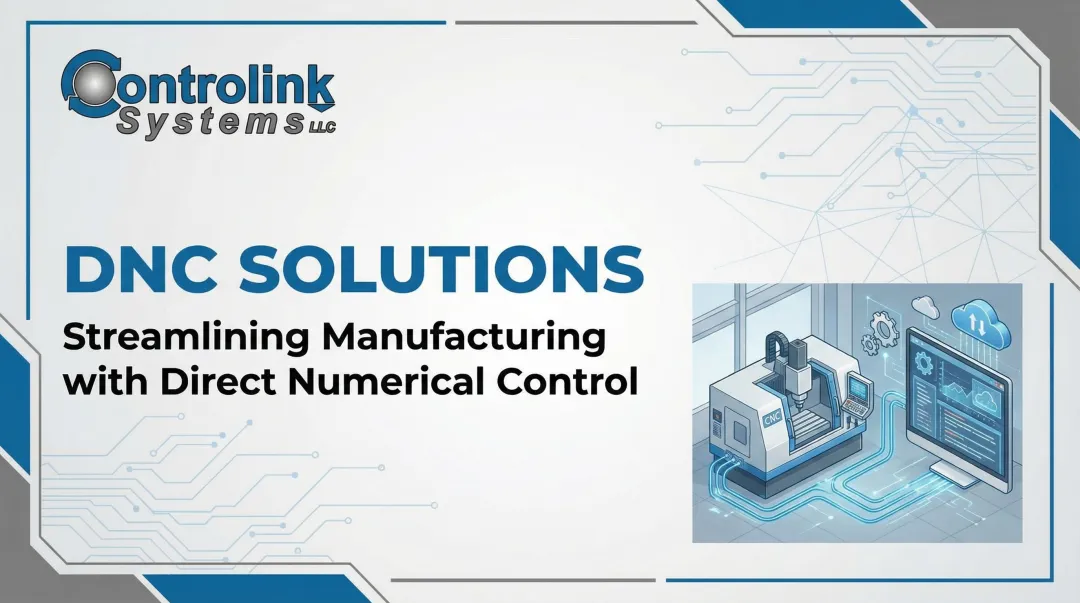
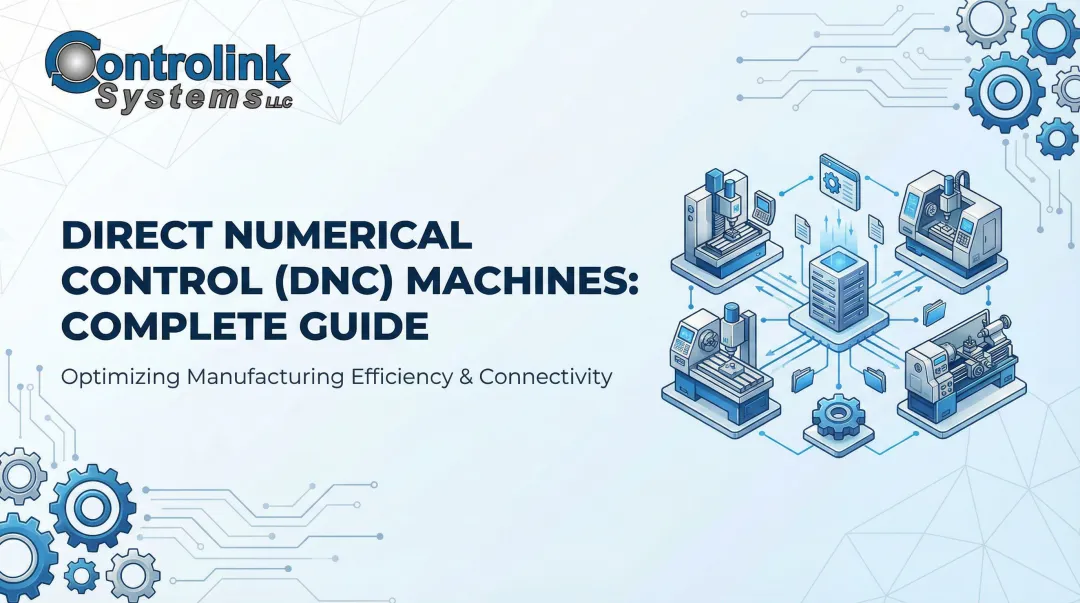
A DNC system solves this by centralizing program management and connecting it directly to CNC machines, both networked equipment and older legacy controls still running the floor.
This guide covers what a DNC system actually is, how it differs from CNC and CAM, and how an approved program moves from engineering release to machine execution—and back again—with a full record of what ran.
Key Takeaways
- Centralized DNC manages and transfers approved NC/G-code programs to every CNC machine
- Vendors may use Direct or Distributed Numerical Control for the same DNC acronym
- Workflow runs creation → approval → revision control → machine selection → transfer → verification
- It governs the CAM-to-controller link—it does not replace either system
- Machinists run the latest approved file, with less manual transfer and lower scrap risk
What Is a DNC System?
A DNC system is the software, database, network connection, and interface layer that stores, controls, and sends NC programs to CNC machine tools. It sits between the systems that create programs and the machines that run them.
Lenze describes DNC's essential feature as central storage, administration, and distribution of workpiece machining programs by a central computer. That's the core idea: one governed source of truth, instead of scattered files on shared drives or thumb drives passed hand to hand.
Direct vs. Distributed: Two Names, One Function
The acronym splits depending on who you ask:
- Direct Numerical Control — the more commonly spelled-out term in trade publications
- Distributed Numerical Control — used to describe program distribution across multiple machines
Controlink Systems' own shop-floor documentation uses "Distributed Numerical Control," while its Machine Link™ product documentation refers to "Direct Numerical Control." Both describe the same function: getting the right file to the right machine, reliably.
What DNC Is Not
DNC gets confused with adjacent systems often. Here's the actual boundary:
| System | What it does | DNC's relationship |
|---|---|---|
| CAM | Creates and post-processes the NC program | DNC stores and delivers the file CAM produced; it doesn't generate code |
| CNC controller | Interprets commands and drives machine axes | DNC hands the controller a file; the controller executes it |
| MES | Manages production execution and scheduling | May integrate with DNC, but handles broader operations planning |
| ERP | Runs enterprise-wide business processes | Sits above DNC, focused on sourcing and logistics, not program transfer |
Siemens notes that CAM and PLM platforms can integrate with DNC to deliver and manage files at CNC machines, reinforcing that DNC is the connective layer, not a replacement for any of these systems.
Core Components You Should Expect
With those boundaries clear, a working DNC setup typically includes:
- A central repository organized by part number, machine, operation, and revision
- User permissions and approval status controlling which files go live
- Communication interfaces spanning Ethernet, serial/RS-232, or wireless, depending on the CNC control
That last point matters more than most buyers realize. Modern Machine Shop notes that DNC networks let operators download tool paths, part programs, and other digital files to shop-floor equipment. The same connection serves network-ready machines and older controls that still talk over serial ports.
Most shops run mixed fleets: some CNCs from this decade, others from three decades ago. A DNC system has to talk to both—which is exactly why the technology hasn't gone away.
How Does a DNC System Work?
The workflow connects four stages: releasing an approved program, requesting it, transferring it, and recording what happened. The exact screens vary by platform, but the sequence holds across most implementations.
Initiation: Create and Release the NC Program
A programmer creates or post-processes the NC program in CAM, then submits it to the DNC repository with identifying details: part number, operation, machine type, revision.
Engineering or production staff then review it and mark the usable version as released. Permissions here matter — they stop an unreviewed file from accidentally becoming the active production version.
A few things commonly stall this stage:
- Incorrect post-processor for the target machine
- Missing sign-off or approval
- Incomplete tooling information
- Unclear or inconsistent revision naming
Core Operation: Select and Prepare the Correct Program
The system needs to match a production request with the correct approved program, revision, and target machine, not just serve whatever file was saved most recently.
Requests can come several ways: from the machine control, an operator terminal, a barcode scan on a job traveler, or a scheduled production trigger.
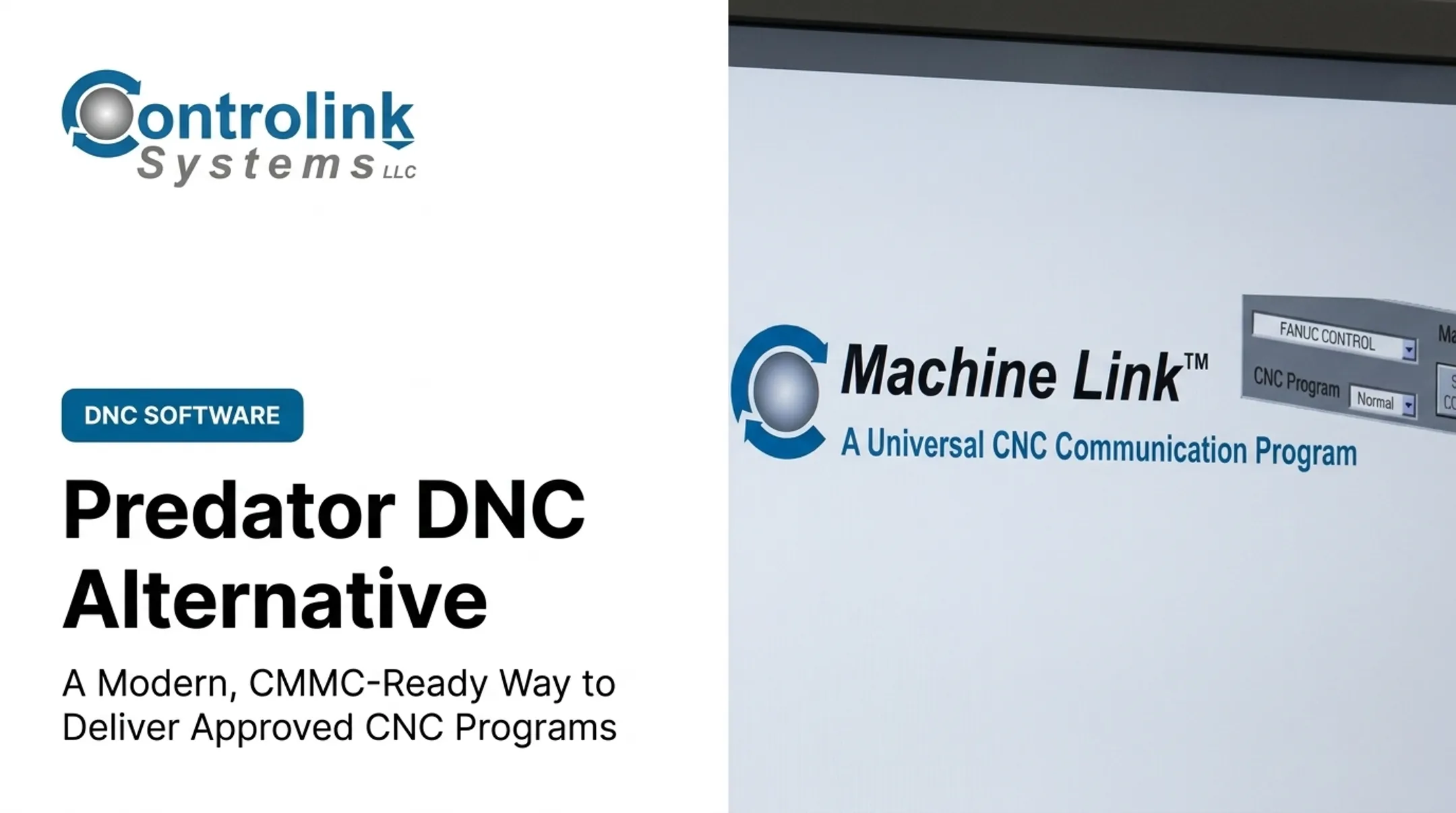
Controlink's Machine Link™ QUICK Serve, for instance, uses a CNC Request Program. The operator types the filename into the machine control's request line, and the system serves the file after a short, adjustable delay—no walk to a terminal required.
Safeguards at this stage typically include:
- User permission checks
- Revision locking so outdated files can't be pulled by mistake
- Machine compatibility verification
- Optional file comparison before the transfer even starts
Regulation and Control: Transfer and Verify the Program
Once the correct file is identified, the DNC server communicates with the selected CNC through whatever connection that machine supports. Ethernet for network-capable controls. Serial/RS-232, or an adapter, for older equipment still running that hardware.
The transfer itself is a controlled transaction: identify the file, send it through the configured protocol, confirm the communication completed, and log the event.
Verification matters because a botched transfer is worse than no transfer. NIST defines a checksum as a value computed from data content and stored or transmitted alongside it to detect changes—the same principle a DNC system can use to confirm a file wasn't truncated or corrupted in transit.
Specific verification methods vary by platform, so confirm what your chosen system actually checks before assuming universal coverage.
Output and Result: Execute, Return, and Improve
Once the transfer completes, the machinist loads and runs the program per the shop's normal procedures. That's the expected path.
But not every program stays untouched. Some workflows let a machinist send an edited or field-adjusted program back to a controlled inbox rather than silently overwriting the master file.
Controlink's Machine Link™ QUICK Serve, for example, routes returned programs into a temporary engineering folder for review before they enter the CNC program library. Good edits become a new approved revision. Bad ones get caught before they spread.
That return path supports:
- Fewer manual trips across the shop floor
- Clear traceability on which revision ran on which machine
- Lower risk of parts machined from an obsolete file
A quick illustrative example: A programmer posts a fixture program in CAM, submits it to the repository, and it's approved as Rev C. An operator requests it by filename at the machine control. The file transfers over serial to a 15-year-old lathe and runs the job.
Mid-shift, the machinist tweaks a feed rate. That edit routes back to engineering for review rather than becoming the new default automatically.
Every request, transfer, and edit generates a record: who asked for it, which machine received it, and which revision was involved. Those logs support troubleshooting, quality investigations, and training down the line, particularly in shops where a customer or auditor wants to see exactly what ran and when.

Where Are DNC Systems Used?
DNC sits right after CAM or engineering finalizes a program and before or during CNC setup. It can also connect with production scheduling, document management, or MES/ERP systems, though not every DNC platform offers those links.
Common Environments
Those connections matter most in a few shop types:
- CNC machine shops running repeat jobs or many part variants that need consistent revision control
- Aerospace, defense, medical-device, and automotive manufacturing, where traceable, approved production data carries real weight
- Research labs, repair centers, stamping plants, and mold shops, especially those running mixed-age equipment
A DNC system does not by itself satisfy AS9100, ISO 13485, or IATF 16949; those standards cover the broader quality system.
Snavely's Machine in Wabash, Indiana shows the mixed-fleet case in practice: 30-plus CNC machine tools, 10 control types, and 40 operators. Machine Link™ was deployed to get the right program to the right machine across that variety.
When DNC Earns Its Keep
A DNC system pays off fastest when a shop has:
- Multiple CNC machines running different controls
- Frequent program revisions
- Long or memory-intensive programs that don't fit older machine memory
- Legacy controls still communicating over RS-232
- Recurring errors traced back to removable media or manual file handling
That last point isn't a niche concern. Over 70% of manufacturing equipment in North America is more than 20 years old, according to a Manufacturing Leadership Council study reported by IndustryWeek. Mixed fleets, new machines alongside decades-old ones, are the norm, not the exception. DNC exists precisely to bridge that gap.

Evaluating a DNC System
Before buying, confirm the platform:
- Supports your CNC controls over serial, Ethernet, or both, matched to what is on your floor
- Handles your file formats and memory needs without truncating long programs
- Provides permissions, backup, and audit trail features your quality process needs
- Integrates with CAM, MES, ERP, or machine monitoring already in place, or works cleanly without those links
Controlink Systems has spent over 25 years building CNC/DNC tools such as Machine Link™ and Machine Link™ QUICK Serve for shops running one machine or fleets of 30-plus controls across many brands. The focus is linking systems you already have, not forcing replacements.
Conclusion
A DNC system is the controlled bridge between an approved NC program and the machine that executes it. It manages the right file, the right revision, the right destination, and keeps a record of the whole transaction.
That matters most on mixed floors—legacy controls beside newer equipment—where manual file handling still creeps in. It also matters when you need a cleaner path from engineering sign-off to the cut on the floor.
Know what DNC does, and what it leaves alone. Then choose a system by how programs move from approval to the spindle in your shop, not by a generic feature list.
Frequently Asked Questions
What is a DNC system for CNC machines?
A DNC system centrally stores, controls, and transfers approved NC/G-code programs to CNC machines. It also manages revision control and keeps a traceable record of every file transfer.
What does DNC stand for in the context of manufacturing?
DNC can mean either Direct Numerical Control or Distributed Numerical Control, depending on the vendor and industry usage. Most systems manage programs across multiple networked or mixed CNC machines.
How does a DNC system send programs to CNC machines?
The system stores approved files in a central repository, matches a machine or operator request to the correct revision, and transfers it over Ethernet or serial/RS-232. It then confirms the transfer and logs the event.
What is the difference between DNC and CNC?
CNC is the control technology built into the machine itself, handling axis movement and command interpretation. DNC manages the programs and communication link between production systems and one or more CNC machines.
What are the benefits of using a DNC system?
DNC centralizes approved files, enforces revision control, and cuts down on manual file transfer. It also improves traceability and supports shops running mixed legacy and modern machines. That lowers the risk of running an outdated program.
Can a DNC system work with older CNC machines?
Yes. Many DNC systems support legacy controls through RS-232 serial connections or compatible interface hardware. Confirm compatibility for each machine, control type, and communication setting.