
Introduction
When a CNC job fails inspection, the first suspects are usually tooling wear, machine calibration, or operator technique. Rarely does anyone ask a simpler question: was the machine even running the correct version of the program?
US machine shops face tighter tolerances, shorter lead times, and more frequent engineering changes than a decade ago. Those pressures raise the cost of any process error, including the wrong file reaching the spindle.
Every minute spent troubleshooting a mystery defect is time and material already spent. Program revision control fixes this at the source: instead of relying only on end-of-line inspection, it keeps the wrong instructions from ever reaching the machine.
That prevention focus is a real first-pass-yield lever. This article covers why version mix-ups slip through, how controlled program release stops them, and what shops need in place to hold the gain.
Key Takeaways
- Revision control keeps machinists on the current, engineering-approved file for every part and setup
- Uncontrolled file versions cause repeat defects, scrap, downtime, and unplanned troubleshooting
- Cross-referencing first-pass yield with program revision history isolates root causes faster
- Effective control pairs approved storage, clear naming, change approval, and machine-side verification
- CNC/DNC tools cut manual file-transfer risk across machines and shifts
What Is CNC Program Revision Control
Program revision control is a documented method for creating, approving, identifying, distributing, using, and retiring CNC programs and their supporting files. That scope extends well beyond the main G-code file.
A controlled item can include:
- The primary NC program and any subprograms or macros
- Probing routines and tool offset tables
- Setup sheets and work instructions
- Related engineering documents, such as drawings and travelers
This applies to mills, lathes, machining centers, and multi-axis equipment, especially in shops running repeat production or sharing programs across machines and shifts.
At Snavely's Machine in Wabash, Indiana, more than 30 CNC machine tools across 10 different control types and 40 operators made getting the right program to the right machine, in their own words, "quite an ordeal."
Revision control is a mechanism for controlled production, not a filing exercise. Inspection still matters, but it works better when the process feeding it is already correct.
Key Advantages of Program Revision Control
The value of revision control shows up in operational outcomes, not paperwork. First-pass yield, scrap rates, rework hours, downtime, and traceability all move when file control improves.
Prevents Obsolete or Unapproved Programs From Reaching the Machine
Uncontrolled folders, USB drives, local machine memory, and printed setup sheets often leave multiple versions of the same program available at once. An operator grabbing the wrong copy has no way of knowing it's outdated until parts start failing. A controlled release process closes that gap:
- Engineering or programming identifies and marks the approved revision
- Obsolete files are removed or locked so they cannot be selected at the machine
- Only the approved file is released to the point of use Example: An engineering change tightens a bore tolerance and adjusts the toolpath. If the previous revision is still sitting in a shared folder, an operator could run it for an entire batch before anyone notices—turning one change into dozens of scrapped parts. Modern Machine Shop has flagged poor program documentation as a direct cause of wasted time, mistakes, and scrapped workpieces.

Improves Traceability and Accelerates Root-Cause Analysis
A useful audit trail connects more than just a file name. It should link:
- Part number and program revision
- Programmer or approver and release date
- Machine, operator, and shift
- Material lot and setup
- Inspection result and any deviation or rework record This is different from a simple backup. A backup preserves a file; revision control explains which file is valid, why it changed, who approved it, and where it's allowed to run. When a quality team can trace a defect to a specific program change, machine transfer, or tooling adjustment, containment happens faster. Corrective action then targets the real cause instead of guesswork. Busche Enterprises in Albion, Indiana, managed CNC programs across 46 machine tools—the kind of multi-machine scale where revision discipline either holds or breaks. Once a shop grows past a handful of machines, every release has to stay consistent across cells and shifts. Useful KPIs to track:
- Defects tied to obsolete revisions
- Time to identify the active program
- Repeat nonconformances
- Corrective-action closure time
Raises First-Pass Yield Through Earlier Process Control
The American Society for Quality defines first-pass yield as the percentage of units completing a process to requirements without scrap, rework, retest, or return. That's a stricter measure than final yield, which can hide the fact that parts needed rework to pass. Correct file selection removes a whole category of preventable variation before the spindle ever turns. When the program is right, inspection data reflects true process capability rather than a mix of process issues and file-identity mistakes. When first-pass-yield losses appear, sort them by cause:
- Wrong or obsolete program revision
- Programming errors
- Setup deviations
- Tooling or machine condition
- Material variation
- Measurement error
- Operator handling This breakdown matters because file-related losses are the ones a shop can eliminate almost entirely with process discipline, unlike material lot variation. The gains compound when approved changes reach every machine and shift consistently, rather than trickling out unevenly across a plant.
What Happens When Program Revision Control Is Missing or Ignored
The failure pattern is familiar on most shop floors. A revised program gets created, but the old version stays accessible somewhere. An operator selects the wrong file. The first piece—or the entire batch—fails, and the shop only finds out after material, machine time, and inspection capacity are already spent.
Common symptoms of missing revision control:
- Inconsistent results between machines running "the same" program from slightly different copies
- Repeated defects misdiagnosed as tool wear or machine drift when the real cause is an uncontrolled file
- Setup sheets, offsets, or subroutines that quietly diverge from machine to machine
Ametek, Inc. saw this firsthand. Corrected copies made at the machine often weren't sent back and saved centrally, so the same fix had to be repeated the next time the program went out.
Their fix was simple: route machine-side corrections into an engineering folder for review before anything reentered the CNC program library. That closed the loop instead of letting corrections evaporate.

The business consequences extend past scrap:
- Missed delivery commitments
- Emergency engineering support calls
- Customer complaints
- Weak audit evidence
All of it traces to the same root cause. Under AS9100 requirements, documented information must be controlled and protected from unintended alteration, with clear authorization records for any change. Shops without that discipline struggle to prove which process actually produced a given part.
Inspection cannot fully compensate for this. By the time a part is measured, the process has already consumed time and material. Catching the wrong revision after the fact is damage control, not prevention.
How to Get the Most Value from Program Revision Control
Revision control needs to be simple enough for a busy shift to follow and strict enough to remove ambiguity about which file is correct.
Build a Controlled Release Workflow
A minimum workflow looks like this:
- Create or modify the program in the controlled environment
- Run technical review or simulation against the current process
- Approve the revision with the required sign-offs
- Assign a unique identifier tied to the part and operation
- Release it only to the correct machine or work center
- Archive the prior version so it cannot be selected by mistake
- Record the change with date, owner, and reason

Approval should cover:
- Program logic and safety moves
- Tooling, workholding, and offsets
- Coordinate systems and probing routines
- Feeds and speeds
Not every edit needs a full new revision. Define in writing what counts as a minor administrative update versus a change that requires re-verification.
A practical approval checklist should identify:
- The responsible programmer and reviewer
- Quality or engineering sign-off
- Effective date
- Affected part numbers
- Machines or work centers where the revision applies
Make the Correct Revision Obvious at the Point of Use
Naming conventions should make the right file obvious without tribal knowledge. Include:
- Part number and operation
- Machine or work center
- Revision and release status
Skip personal initials and opaque filenames only the programmer understands. Controlled access, read-only released files, and removal of obsolete copies all cut the odds of an operator loading the wrong one.
Operators should verify the program against the setup sheet, drawing revision, traveler, and tooling or offset data before starting a run, not after the first part comes off.
Smaller or offline shops without networked machines can still apply this with a single controlled transfer point, sign-out records, labeled media, and a defined quarantine location for anything unapproved.
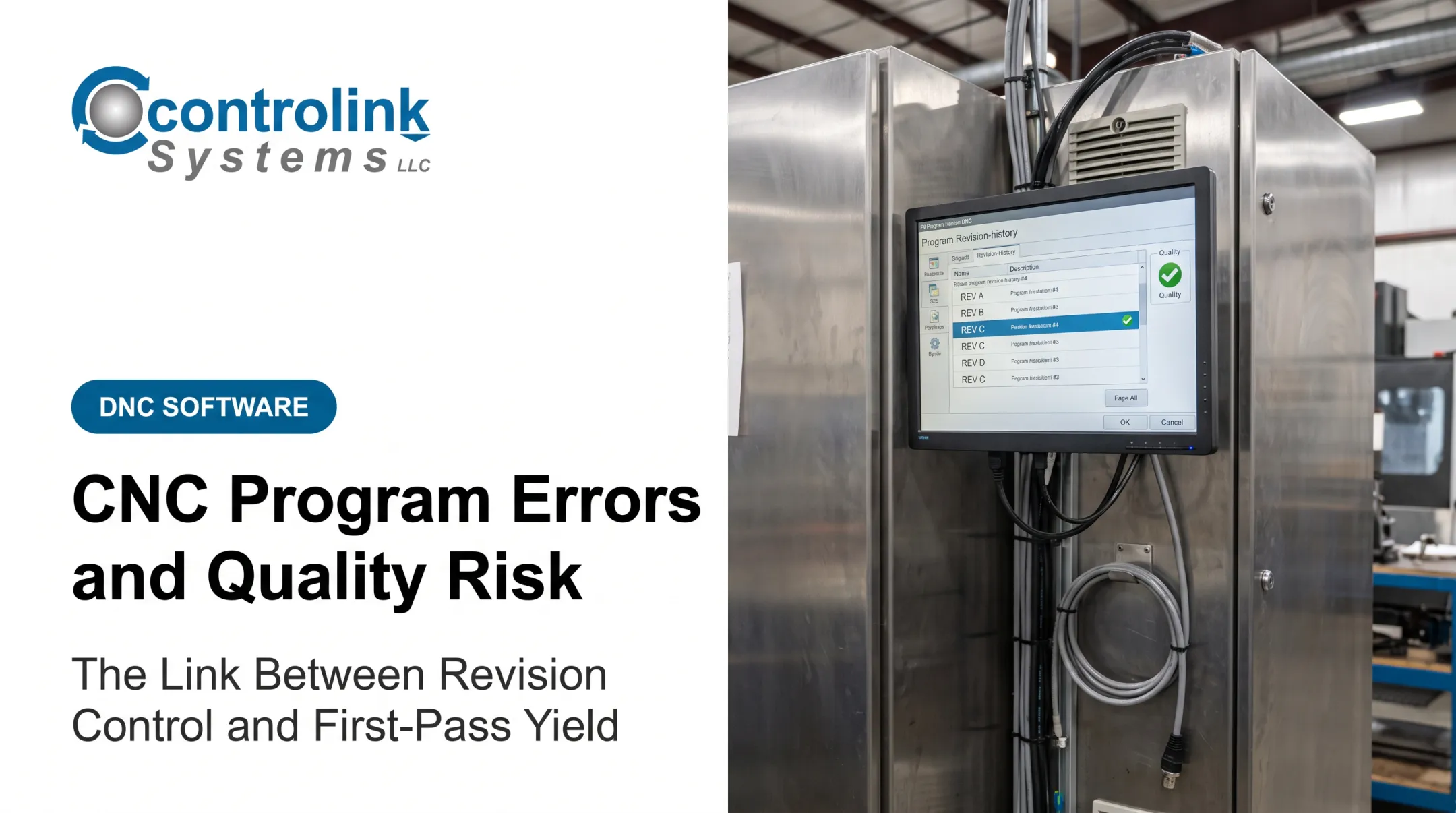
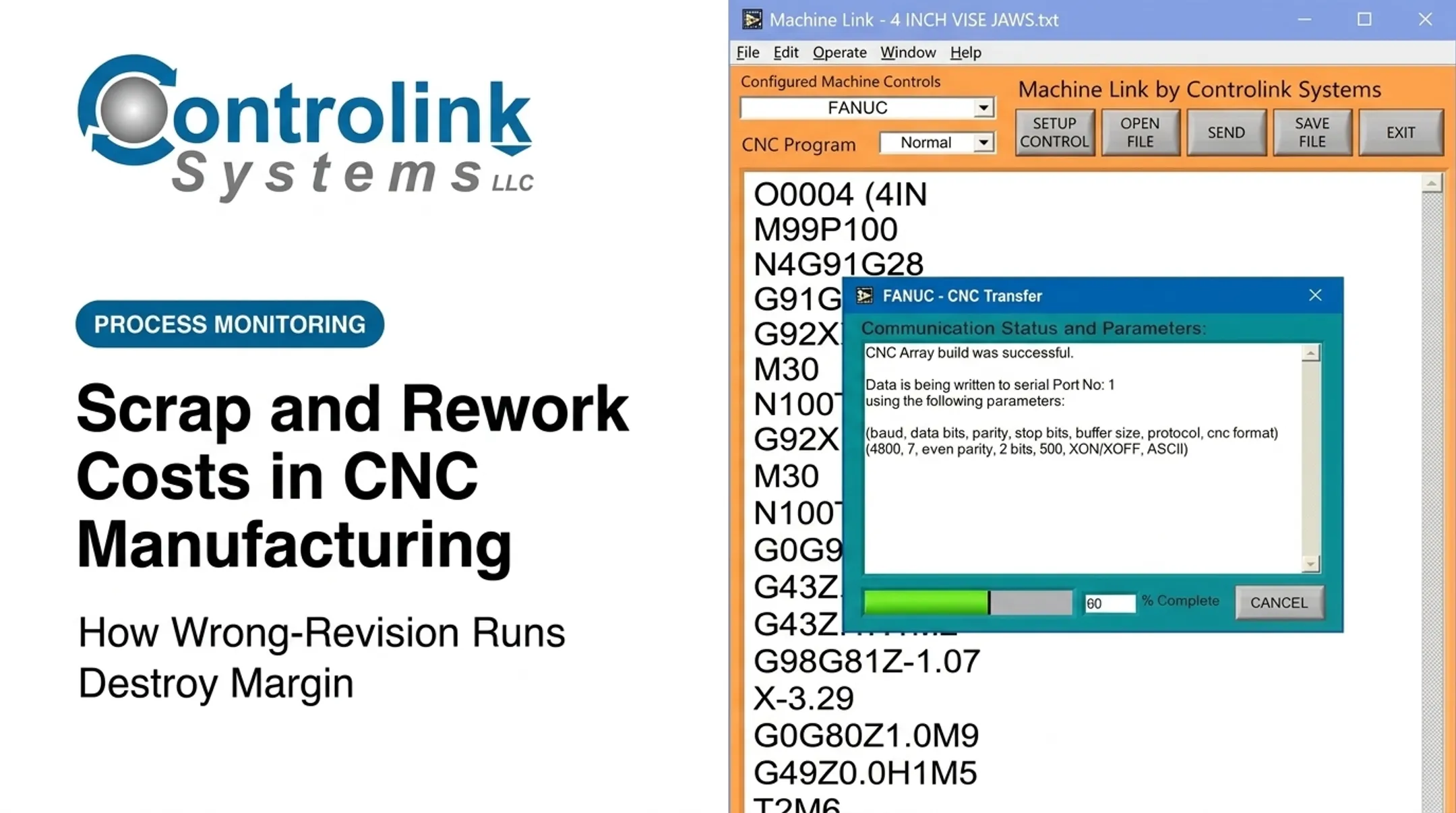
This is where CNC/DNC communication software earns its keep. Controlink Systems LLC builds tools for exactly this problem. Its Machine Link™ QUICK Serve system scans machines for file requests, serves the current engineering-approved file to the control, and routes any edits made at the machine back to engineering for review before adoption.
Shops evaluating a solution like this should match capabilities to their own machine controls and workflow before purchasing.
Measure, Audit, and Improve the Process
Track first-pass yield alongside scrap and rework, broken out by part number, program revision, machine, shift, and defect category. That segmentation shows whether losses cluster around a specific machine, revision, or shift. A single aggregate yield number hides that detail.
Regular audits should check:
- Whether the file on the machine matches the released revision
- Whether obsolete files remain accessible anywhere
- Whether changes carry documentation and approval
Near misses deserve attention too. An operator who catches two different revisions before cutting is a leading indicator, not a non-event. Short cross-functional reviews—programming, quality, production, and operators—surface recurring confusion before it becomes a shipped defect.
Conclusion
CNC quality control starts before the first cut. Controlling the programs that create parts matters as much as measuring finished ones. When an approved program reaches the correct machine, the operator can verify it against the traveler and setup sheet. The change stays traceable, and quality data points to a cause someone can act on.
A practical next step: map every location where CNC programs currently live, compare what's actually loaded on each machine against what should be approved, and measure how often revision confusion shows up in scrap or rework logs.
Controlink Systems LLC has worked in CNC/DNC communications, process monitoring, and shop-floor automation since 1998, serving manufacturers including Timken, 3M, and Busche Enterprises. That history reflects experience in machining environments, not a guarantee of a specific result for every shop.
Frequently Asked Questions
How is quality control performed in CNC machines?
It combines preventive controls, like program and setup verification before the cut, with in-process checks, dimensional inspection, and tool or machine monitoring. Revision control belongs at the front of that chain, before machining even starts.
What are the four types of quality control?
CNC operations typically distinguish incoming or pre-production control, in-process control, final or output control, and preventive/corrective control. Terminology varies somewhat by quality system, so check your own QMS documentation.
Why is revision control important in CNC machining?
It stops operators from running obsolete or unapproved programs, which directly improves consistency, traceability, first-pass yield, and how quickly a shop can respond to engineering changes.
What should a CNC program revision-control process include?
At minimum, cover these controls:
- Unique version IDs, technical review, and formal approval
- Controlled release plus easy access to the current file
- Retirement of obsolete versions and operator verification
- Documented change records
How can a shop measure whether program revision control is improving quality?
Track the same metrics before and after you implement revision control:
- First-pass yield, scrap, and rework
- Wrong-revision incidents, near misses, and downtime
- Repeat defects
Segment results by machine, part number, and revision to see where gains actually happen.