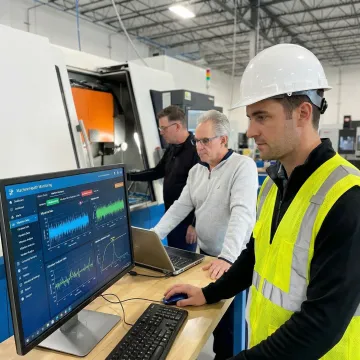
What is machine health monitoring?
Machine health monitoring is the continuous or periodic measurement and analysis of a machine's operating parameters—such as vibration, temperature, acoustic emissions, and electrical signals—to assess its condition. The goal is to detect early signs of wear, imbalance, or fault development so maintenance teams can intervene before a failure occurs, reducing unplanned downtime and extending equipment life.
What is the difference between CBM and PdM?
Condition-Based Maintenance (CBM) triggers maintenance based on a sensor threshold being crossed—meaning a machine is currently showing signs of degradation. Predictive Maintenance (PdM) goes further by using trend analysis and predictive algorithms to forecast when a fault will occur, often before any threshold is breached. PdM typically requires more historical data and advanced analytics, while CBM can be implemented with real-time monitoring alone. Both strategies rely on real-time monitoring systems—like Controlink's iMonitor—to collect the data that drives smarter maintenance decisions.
What are the three types of equipment monitoring?
The three primary types are: (1) Continuous Monitoring, where sensors collect data non-stop in real time; (2) Periodic or Route-Based Monitoring, where technicians collect data at scheduled intervals; and (3) Alarm-Based Monitoring, which triggers alerts when parameters exceed preset thresholds. Controlink's iMonitor platform supports continuous, real-time monitoring for vibration, voltage, and frequency response applications.
What are the 5 elements of condition monitoring?
Based on Controlink's monitoring approach, the five core elements of condition monitoring are: (1) Sensor Integration & Data Collection—capturing accurate signals via accelerometers, voltage sensors, and other instrumentation; (2) Real-Time Data Acquisition—processing and logging measurements continuously using systems like iMonitor; (3) Signal & Vibration Analysis—applying time and frequency domain analysis to identify faults, imbalances, and wear patterns; (4) Threshold Alerting & Alarm Management—triggering notifications when parameters exceed safe limits; and (5) Process Monitoring & Control—integrating data with PLCs, SQL databases, and HMI interfaces to support maintenance decisions and ensure consistent production quality.
What is an equipment monitoring system?
An equipment monitoring system is a combination of sensors, data acquisition hardware, and software that continuously or periodically measures a machine's operating parameters—such as vibration, voltage, and frequency response—to assess its health and performance. Controlink's iMonitor platform is one such system, built on National Instruments hardware and trusted by industry leaders including the Timken Company, 3M, and Oak Ridge National Laboratory to deliver real-time insights and prevent costly equipment failures.
What types of machines and industries does Controlink Systems support?
Controlink's monitoring solutions are designed for a wide range of industrial equipment including CNC machine tools, rotating machinery, conveyor systems, motors, pumps, and custom manufacturing equipment. Their engineering team regularly interfaces with PLCs, motion controllers, and sensors across diverse industries including automotive, aerospace, medical device manufacturing, and research laboratories.
What configurations is the iMonitor platform available in?
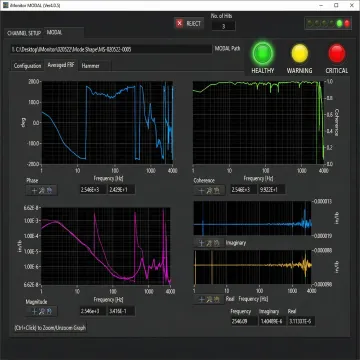
iMonitor is offered in three configurations: iMonitor DAQ for real-time voltage measurements, iMonitor VIBS for voltage and accelerometer measurements, and iMonitor LAB & MODAL for frequency response analysis. Each configuration requires compatible National Instruments (NI) data acquisition hardware, and Controlink's team can assist in selecting and integrating the appropriate NI hardware for your specific monitoring application.
Can Controlink Systems build a fully custom monitoring solution for our facility?
Absolutely. Through their Engineering Services offering, Controlink designs and develops fully customized monitoring, control, and test systems tailored to your exact requirements. They have experience building solutions that integrate SQL databases, PLC hardware, multi-axis motion controllers, and custom HMI interfaces—supporting critical systems that run continuously in demanding manufacturing and industrial environments. You can reach their engineering team by calling (800) 838-3479 or by submitting an inquiry through their website.